← Back to Boards
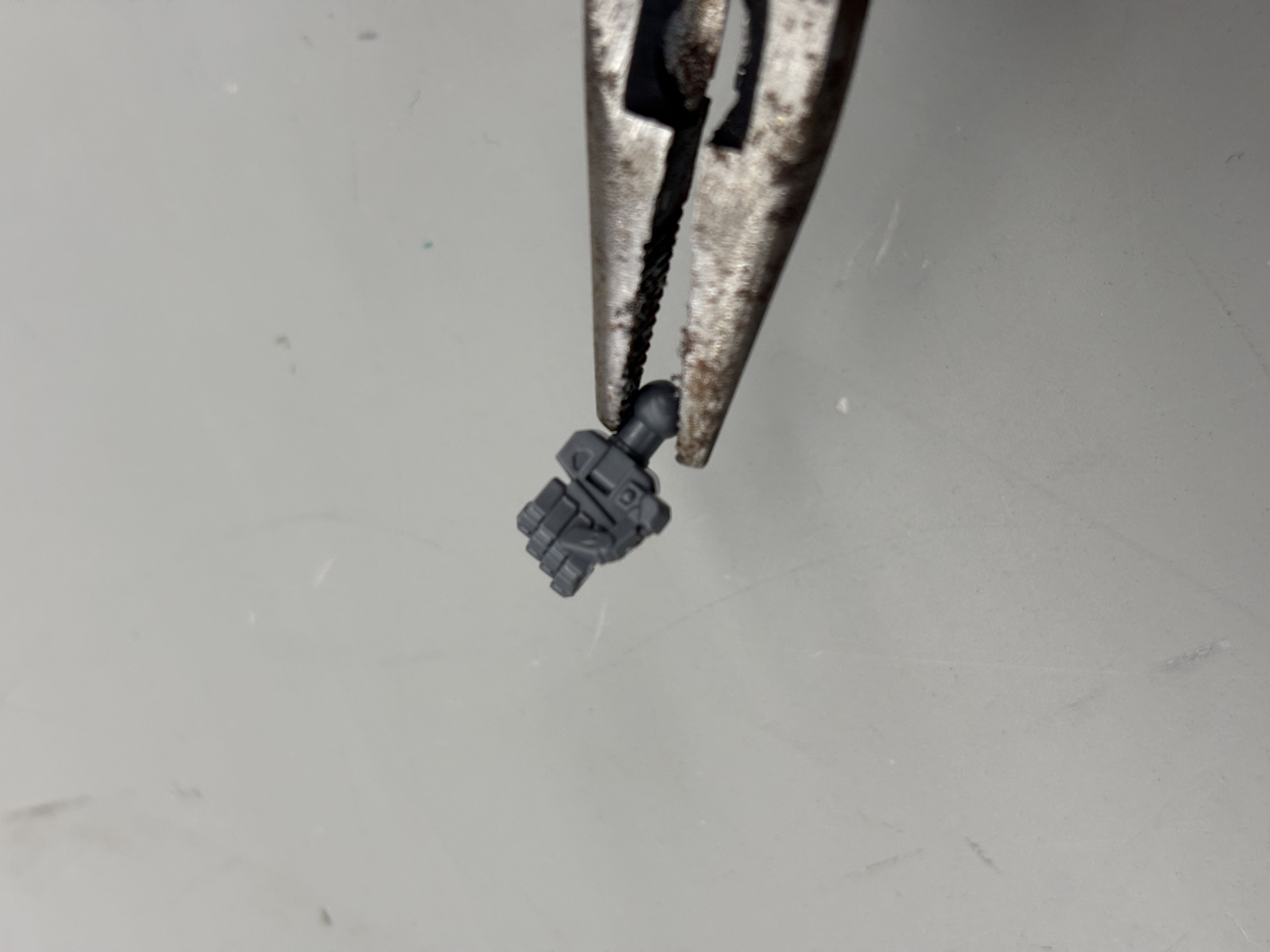
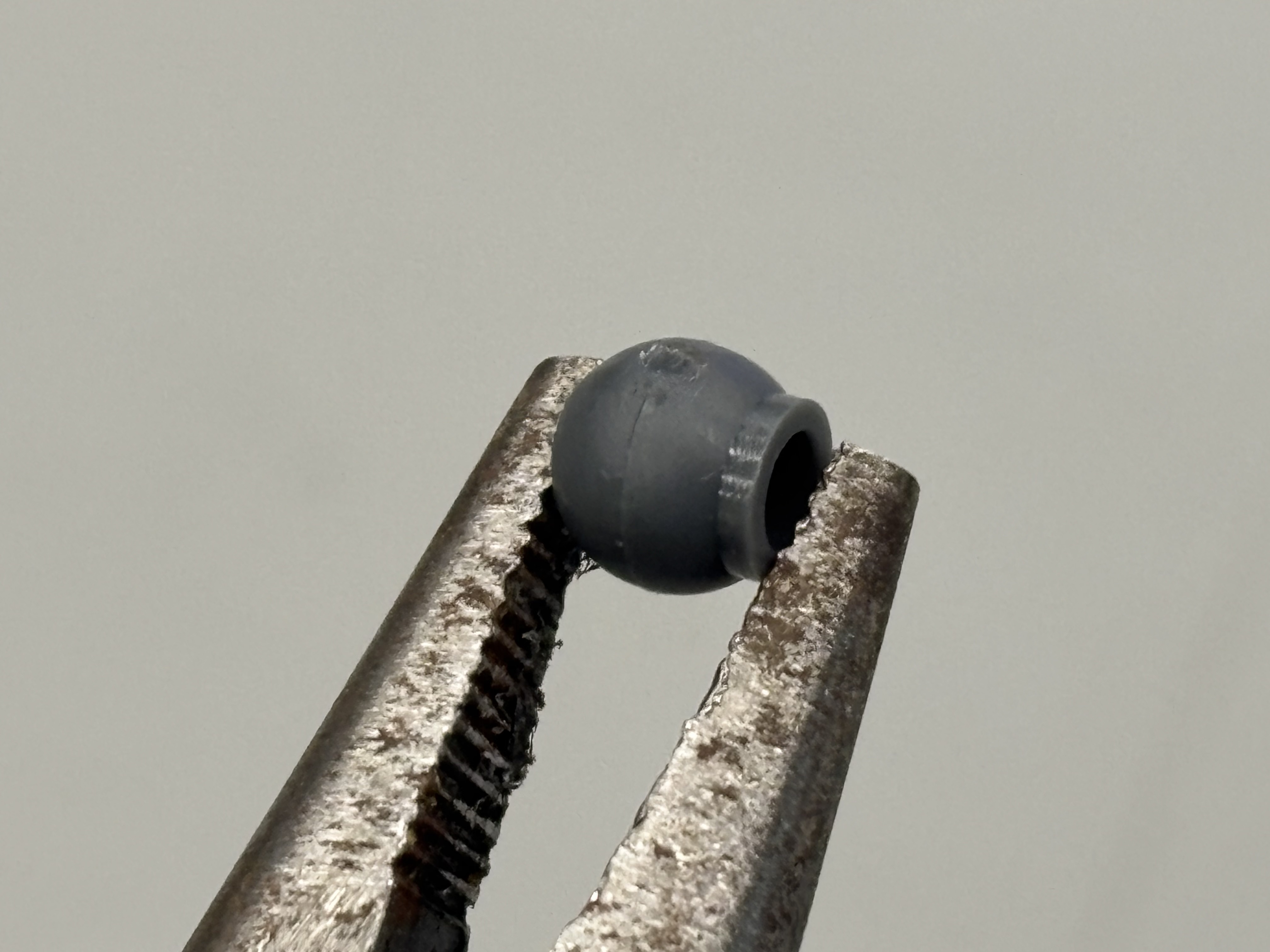
Rigid Board A styrenic runner sample held in tweezers. LLDPE polycap held in tweezers.
Figure 1. Side-by-side comparison of a rigid styrenic runner sample and an LLDPE polycap. The two material families are physically intermixed across the kit but mechanically belong to different regimes of the polymer property space — rigid amorphous on the left, compliant semicrystalline on the right.

4. Material Properties of the Plastics

4.1 Why I Looked at This

How a GunPla kit snaps together, holds a pose, and why some joints go floppy after years of repositioning can all be explained by polymer mechanical properties. The design choices in the kit start to make more sense when you put numbers on stiffness, impact toughness, glass transition, and surface energy for styrenic hard runners and LLDPE polycaps.

SB-13 and Board A are both styrenic hard-runner formulations, while PC7 is polyethylene, which means the largest property split is between the rigid styrenic family and the polycap material. The table below summarizes the values most relevant to a plastic model kit, compiled from academic polymer handbooks and peer-reviewed polymer-property literature for polystyrene, HIPS, LLDPE, and polyethylene surface tension [PS Handbook] [HIPS] [LLDPE Handbook] [PE Surface].
Property Styrenic hard runners (SB-13 / Board A)
[PS Handbook] [HIPS]
LLDPE (PC7)
[LLDPE Handbook] [PE Surface]
Density (g/cm³)1.04 – 1.060.915 – 0.925
Tensile modulus (GPa)≈ 1.6 – 2.5≈ 0.2 – 0.5
Tensile strength at yield (MPa)≈ 18 – 30≈ 15 – 30
Izod impact, notched (J/m)≈ 53 – 107 (1–2 lb·ft/in)No break (ductile failure)
Glass transition / melt T (°C)Tg ≈ 95 – 100Tm ≈ 120 – 125
CrystallinityAmorphousSemicrystalline (≈ 30–55%)
Injection-molding T (°C)190 – 240180 – 240
SurfaceGlossy, paint-receptiveWaxy, low-friction
Resin code6 (PS)4 (LDPE/LLDPE)
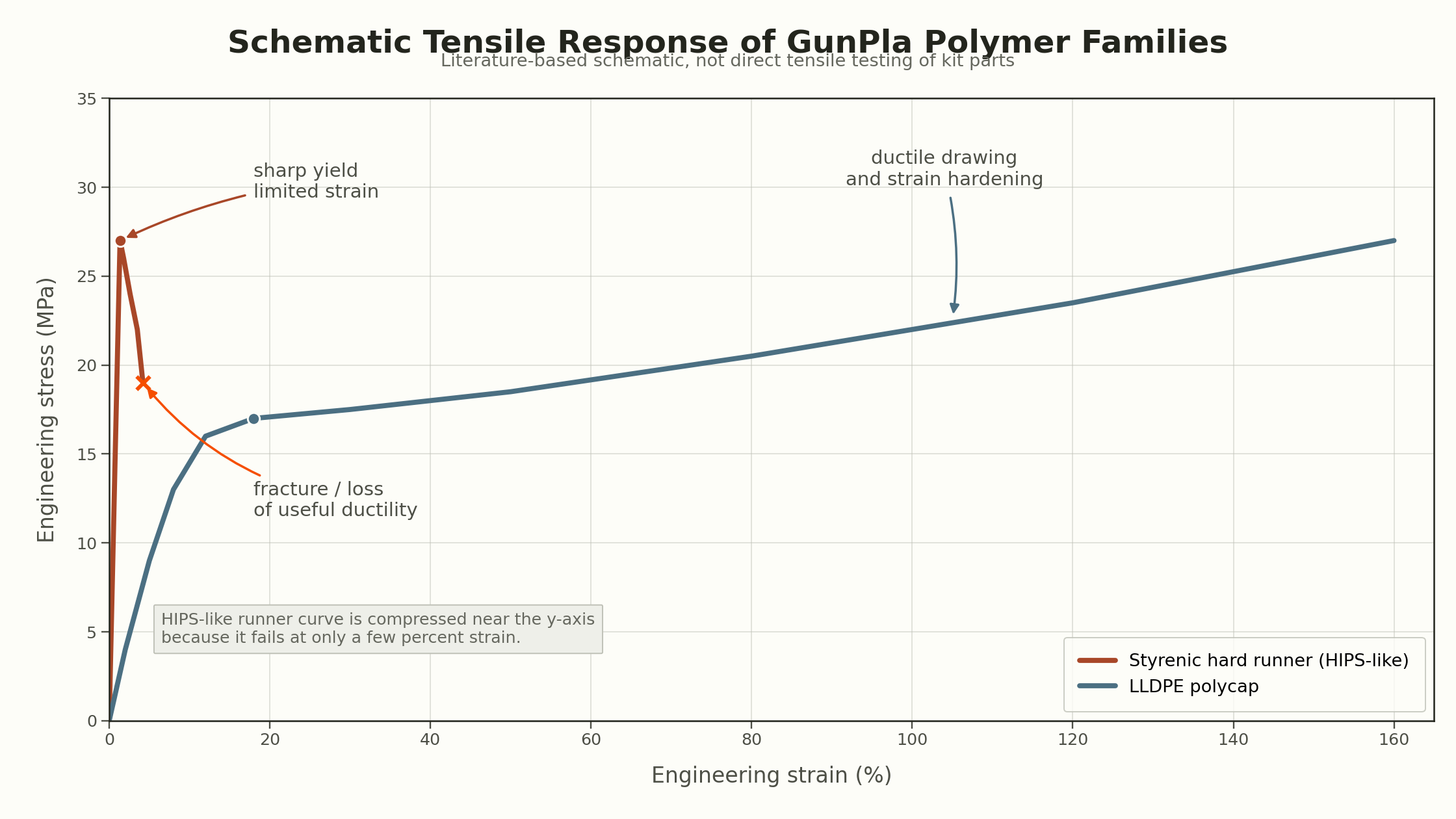
Schematic stress-strain curves comparing styrenic hard runner plastic and LLDPE polycap material.
Figure 2. Schematic tensile stress–strain curves for the styrenic hard-runner plastic and LLDPE polycap material on the same axes, based on published property ranges rather than direct tensile testing of kit parts. HIPS-like styrenics show higher stiffness and limited ductility; LLDPE shows lower stiffness and extended ductile drawing.

4.2 Why HIPS for the Armor

HIPS is amorphous, so it neither shrinks anisotropically on cooling nor sets up internal crystalline stresses. This allows molded armor pieces to consistently reproduce sub-millimeter panel lines. It has a glass transition temperature Tg ≈ 95–100 °C that sits comfortably above all handling temperatures, so the kit will not creep at room temperature or in a sun-warmed display case. Its dispersed polybutadiene phase raises notched impact toughness over general-purpose polystyrene without sacrificing modulus by more than ≈20% [HIPS].


4.3 Why LLDPE for the Polycap

LLDPE works for polycap joints because of three properties. Its low modulus (≈0.2–0.5 GPa) gives the socket enough compliance to accommodate diametral interference without cracking [LLDPE Handbook]. It has a semicrystalline morphology so it relaxes only slowly under sustained load. The polycap grip force is maintained across hundreds of pose changes, bounded by crystalline domains acting as physical crosslinks. Polyethylene's low critical surface tension (≈31 mN/m) means the joint slides cleanly against the HIPS peg without stick-slip [PE Surface].

Figure 3. PC7 polycap runner flexed by hand. The visible bending without brittle fracture is the same compliance the joint design uses when a HIPS peg is pressed into a polyethylene socket.

4.4 Why Polycaps Are Not Glued

Polyethylene is non-polar and notoriously difficult to bond. Most cyanoacrylate, model-cement, and epoxy adhesives require a wetting surface energy above ≈35 mJ/m² to develop interfacial adhesion. Without surface treatment (corona, flame, or chemical etch), neither cyanoacrylate nor polystyrene-cement will bond polyethylene. Bandai's design therefore uses interference fit and snap geometry rather than chemical bonding.

Feature or a Bug?

The introduction of the High Grade (HG) line (first graded line ever) in 1990 was a major marketing push to combine snap-fit convenience with high-level detail and multi-colored plastic, branding Bandai GunPla as a premium but accessible experience.