← Back to Boards

8. Environmental Impact of Production and Disposal

8.1 What I Wanted to Trace

Every GunPla kit produces a cut "runner skeleton" — the plastic frame left after parts have been removed. For a builder who throws this skeleton away, the kit's material story ends at whatever local waste stream they are plugged into. Where the runners go after assembly is an environmental question that crosses the minds of every eco-conscious GunPla builder. So far, I've just put it back into the box where it came from and call it a day. Is there a better way?

I evaluate two end-of-life pathways: (i) the U.S. municipal solid waste stream, where most discarded toys end up; and (ii) Bandai's in-house GunPla Recycling Project, operating a closed-loop runner-collection system at Japanese hobby retailers since 2021.
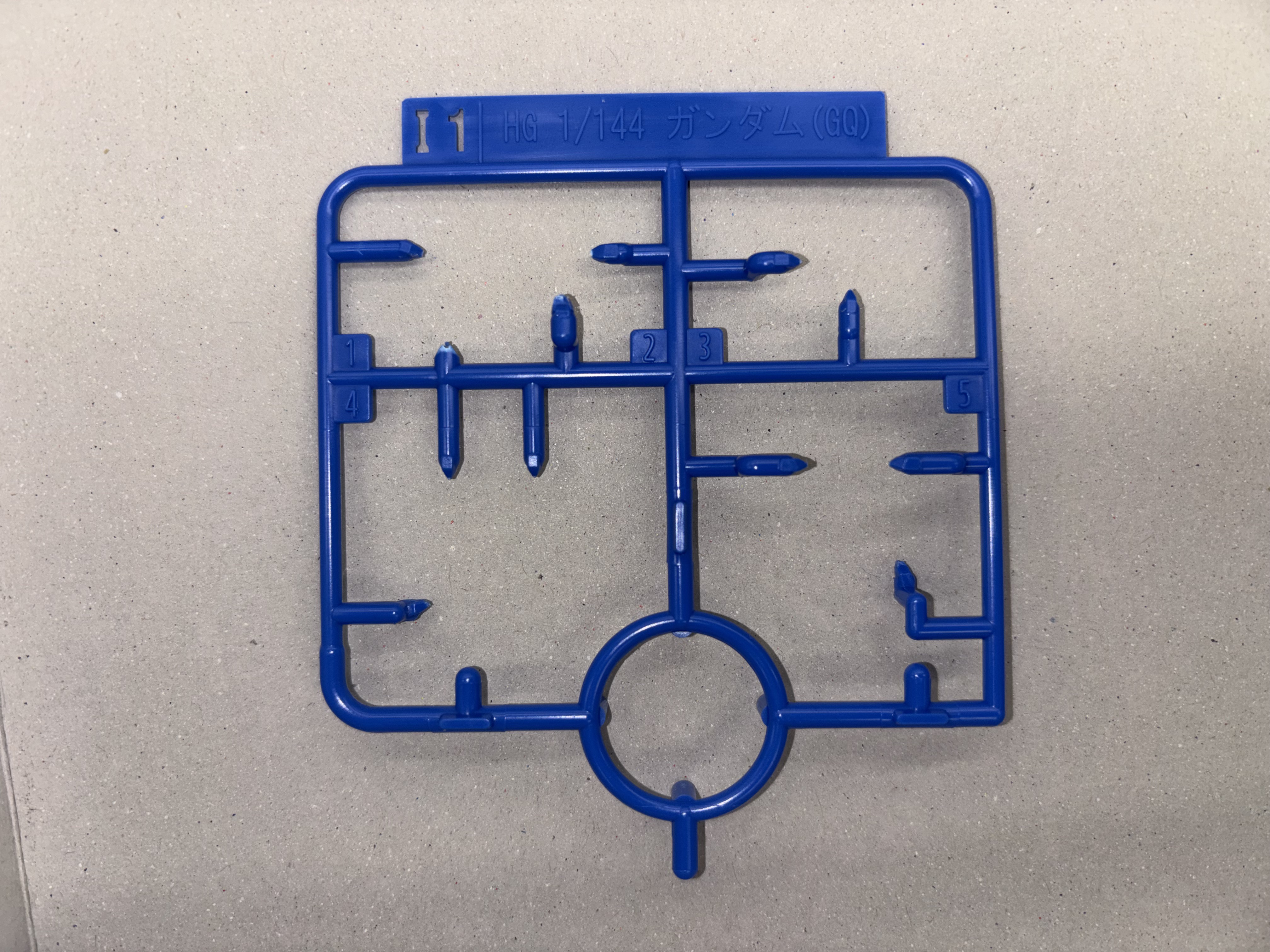
Cut runner skeleton after parts were removed.
Figure 1. Cut runner skeleton after parts were removed. The remaining styrenic frame is the exact waste stream Bandai's recycling project targets.

8.2 Polystyrene and Polyethylene in the U.S. Waste Stream

35.7M
Tons of plastic generated in U.S. MSW, 2018 [EPA]
8.7%
U.S. plastics recycling rate, 2018 [EPA]
27M
Tons of plastic landfilled in U.S. MSW, 2018 [EPA]

Polystyrene is a C–C-backbone polymer inert to hydrolysis and not metabolized at meaningful rates by ambient microbial communities. It is susceptible to photo- and thermo-oxidative degradation, which fragments the polymer into microplastic and nanoplastic particles measured in marine and freshwater systems and biological tissues. HIPS / PS-rich styrenic runners and LLDPE polycaps are also not collected in standard curbside programs. In fact, they are statistically likely to be landfilled rather than recycled.


8.3 The GunPla Recycling Project

Bandai Spirits launched the GunPla Recycling Project in April 2021 at participating Japanese hobby stores. Customers return their cut-off "runner skeletons" into in-store collection bins. The collected material is processed via three pathways:

1
Material Recycling
The dominant pathway. Runners are crushed, melted, and pelletized; pellets are re-injected into new model kits sold under the "Ecopla" label. Because input runners are mixed in color, Ecopla parts have variable, unpainted color. Bandai markets this as a feature.
2
Chemical Recycling
A smaller share of runners is depolymerized to monomer and re-polymerized to fresh polymer. This pathway accepts contamination that mechanical recycling cannot, but is energy-intensive.
3
Thermal Recycling
Material that cannot be material- or chemically recycled is incinerated with energy recovery, similar to the U.S. EPA's "MSW combustion with energy recovery" category.
~200
Runner collection locations in Japan [Bandai]
37 t
Collected in fiscal 2024 [Bandai]
117 t
Collected from April 2021 through March 2025 [Bandai]
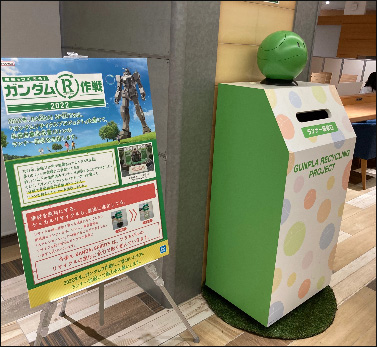
GunPla Recycling Project runner collection bin.
Figure 2. GunPla Recycling Project runner-collection bin. The bin is the consumer-facing endpoint of the closed-loop pathway: cut sprue dropped here is the feedstock for Bandai's material, chemical, and thermal recycling routes. Source: Bandai MIRAICREATION.
Ecopla GunPla kit molded from recycled runner material.
Figure 3. Ecopla GunPla kit molded from recycled runner material. Because the input stream is mixed runner plastic, the recycled material is visually distinct from normal single-color virgin runners; Bandai presents that difference as part of the product identity. Source: Bandai MIRAICREATION.

8.4 Net Assessment

There are two principal risks to consider: (a) End-of-life leakage of cut sprue into the curbside waste stream, where it is statistically likely to be landfilled rather than recycled. (b) Microplastic generation from the abrasive cutting and sanding step performed at the hobby bench. Bandai's Recycling Project addresses (a) but not (b); for (b), the literature recommends wet sanding and over-the-bin disposal.